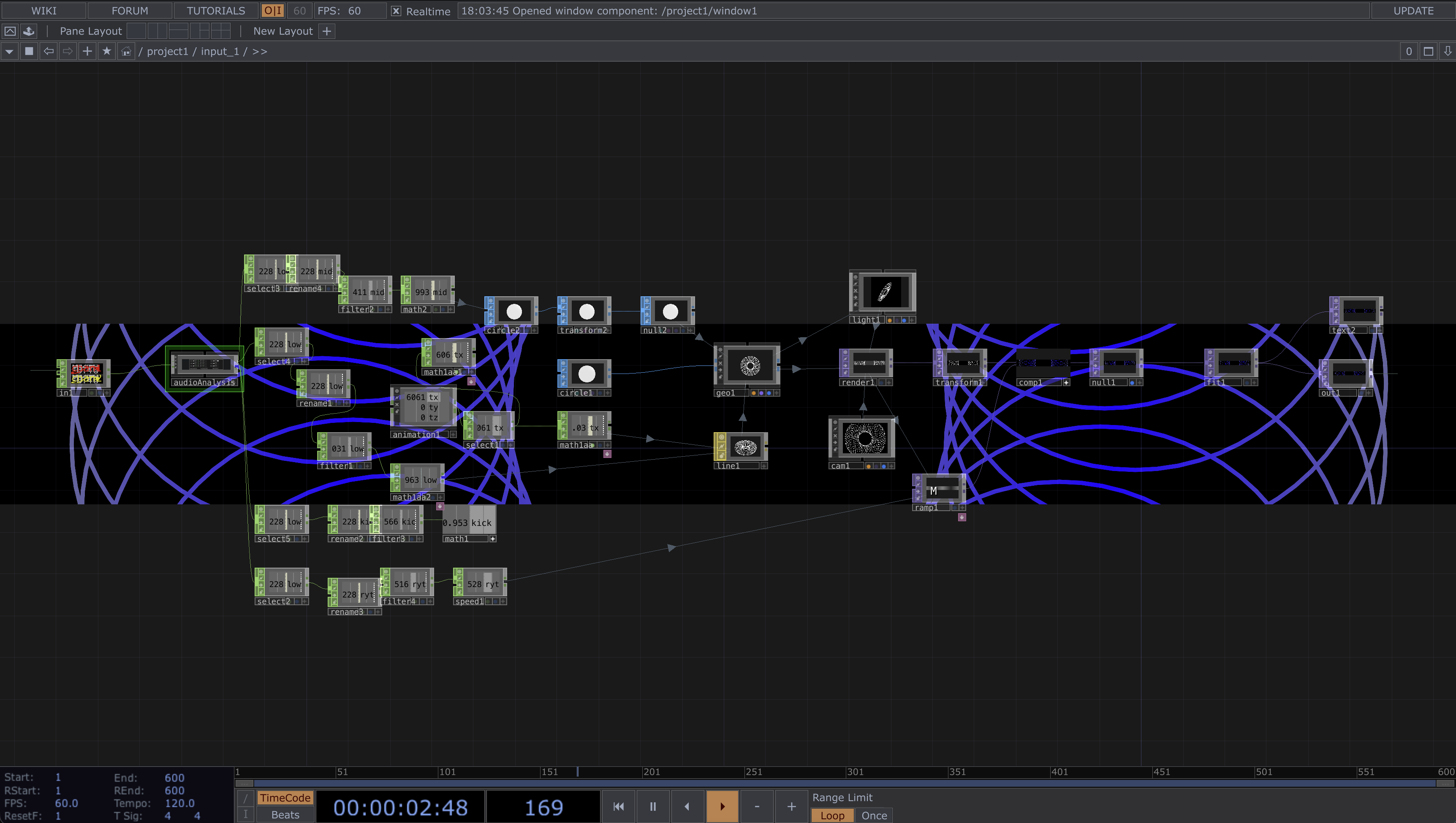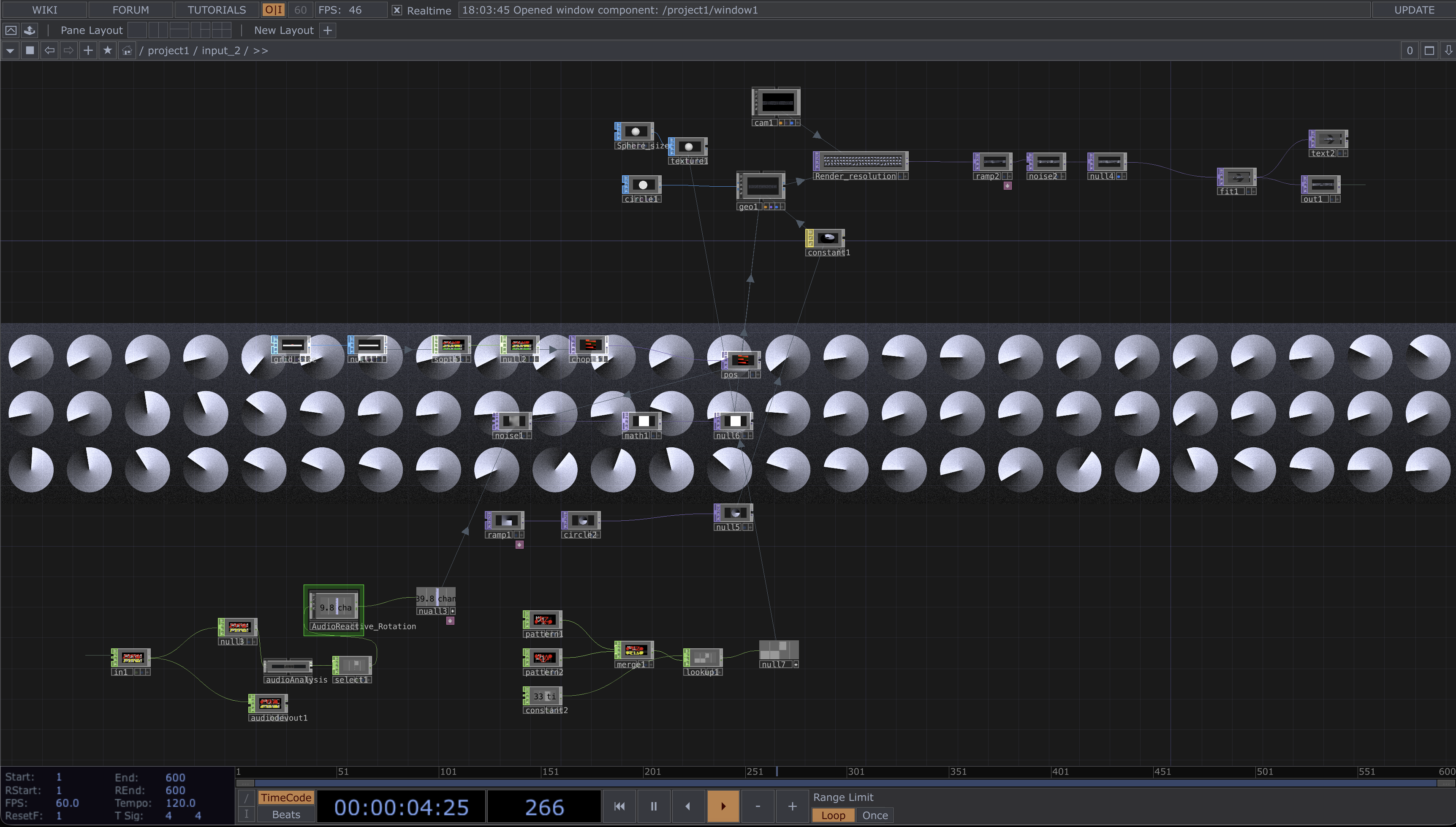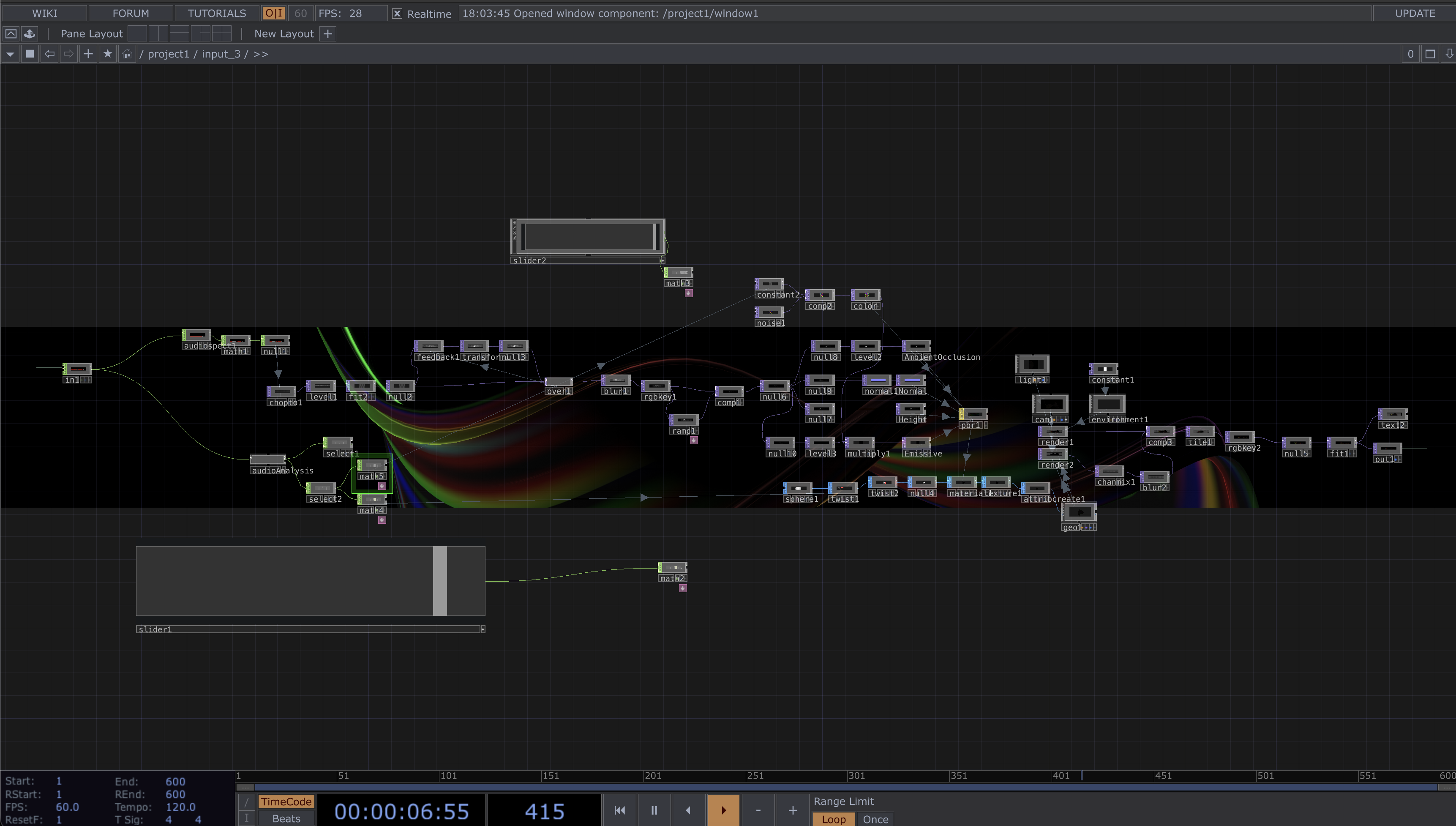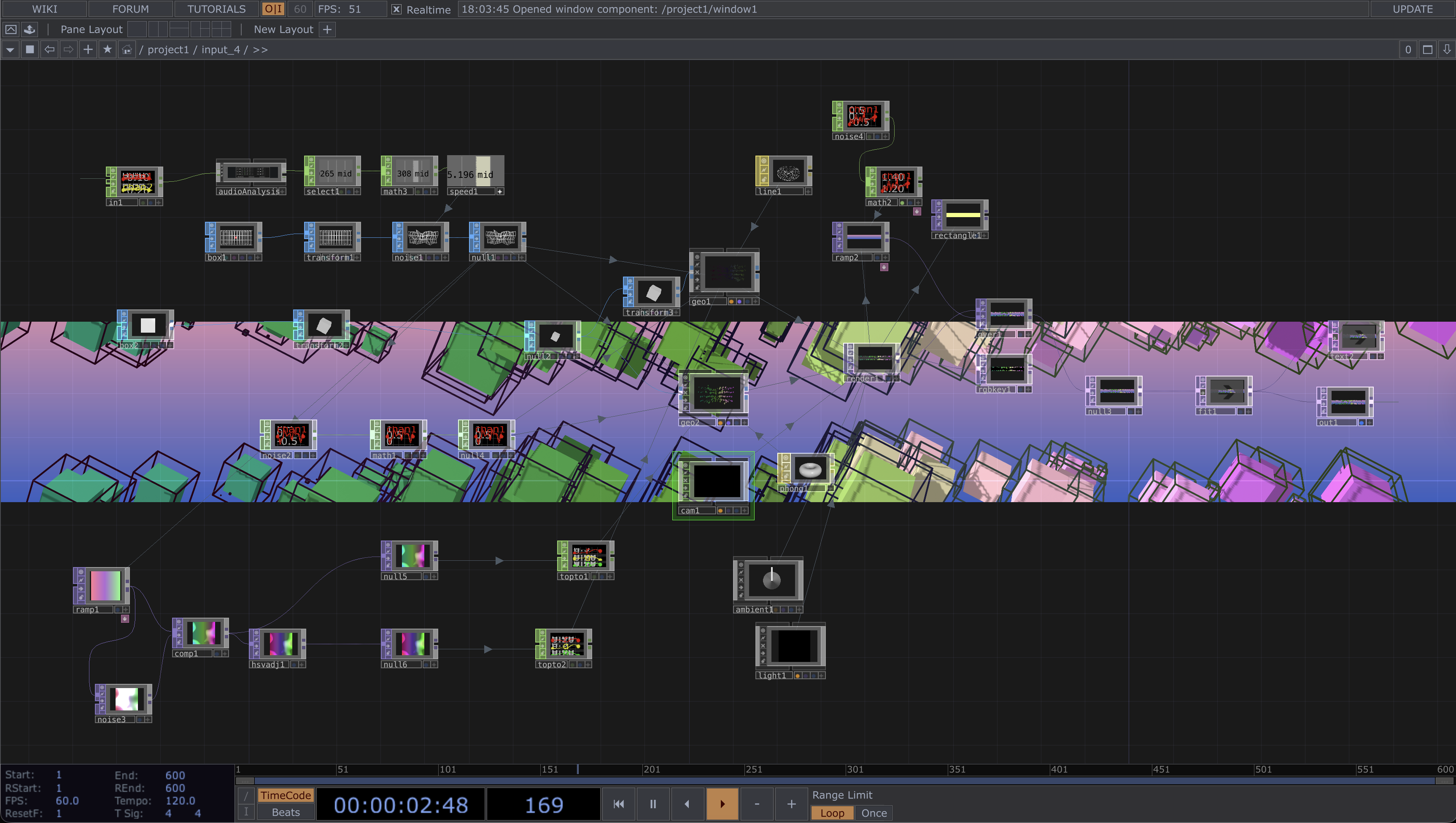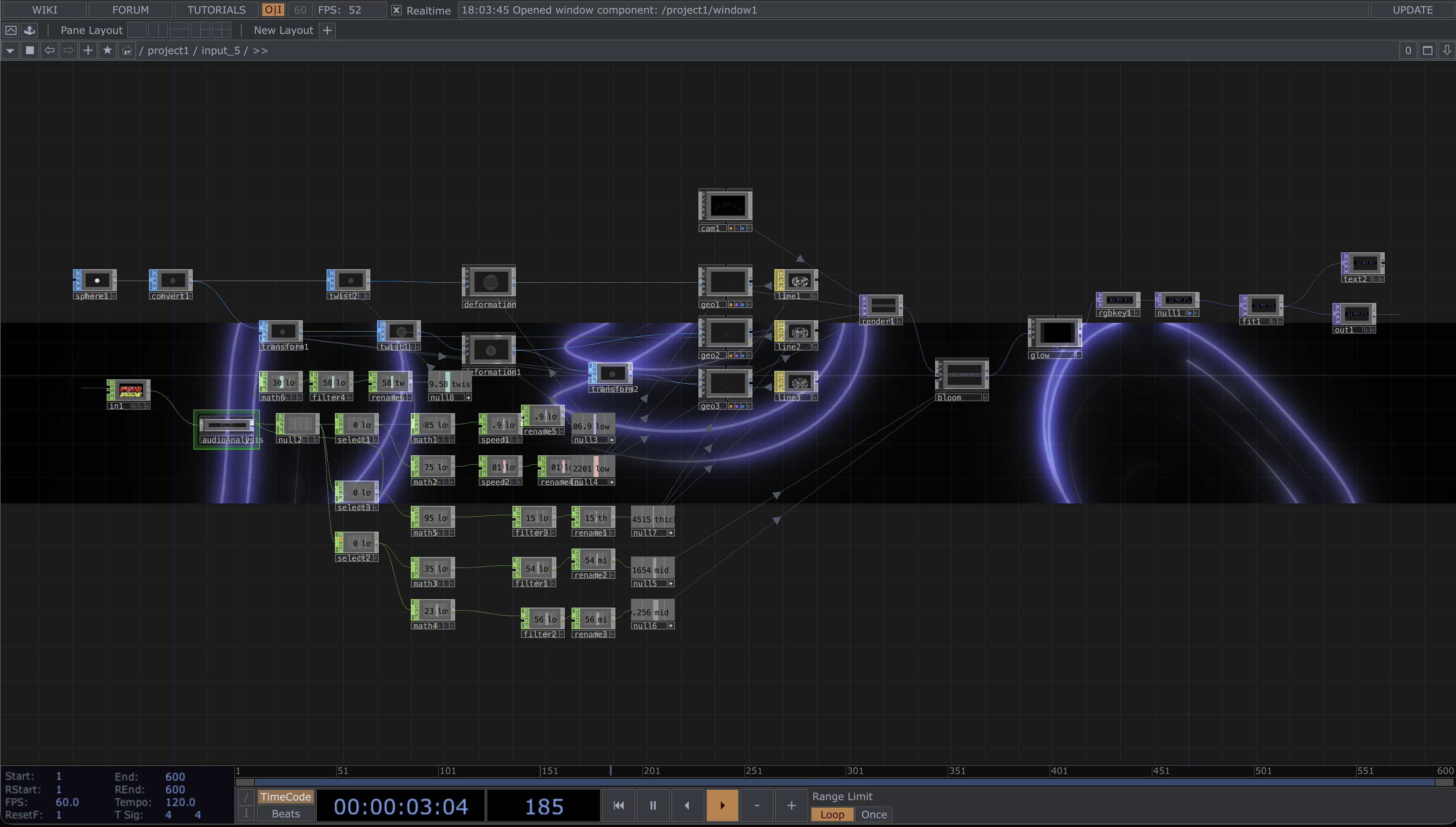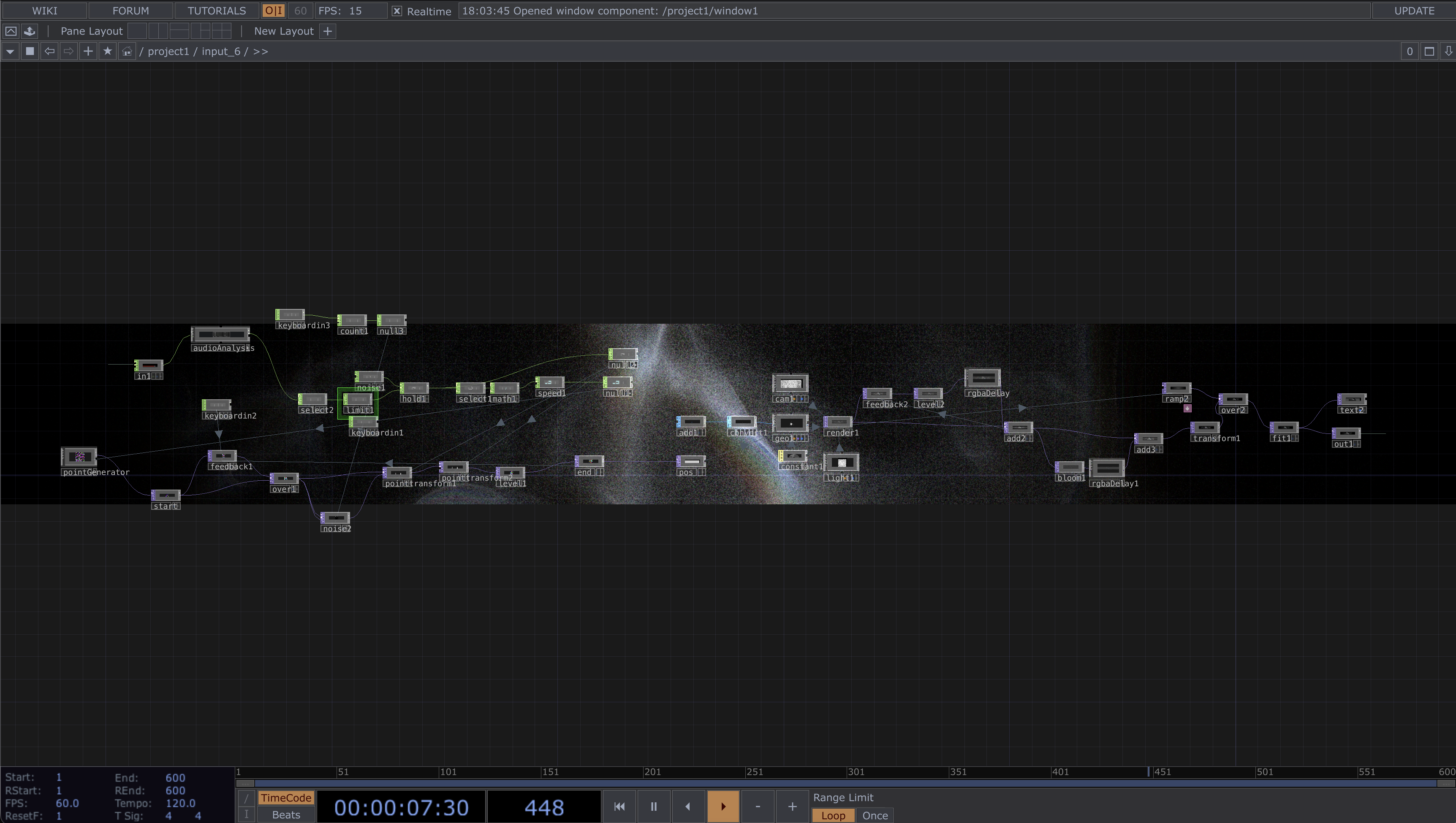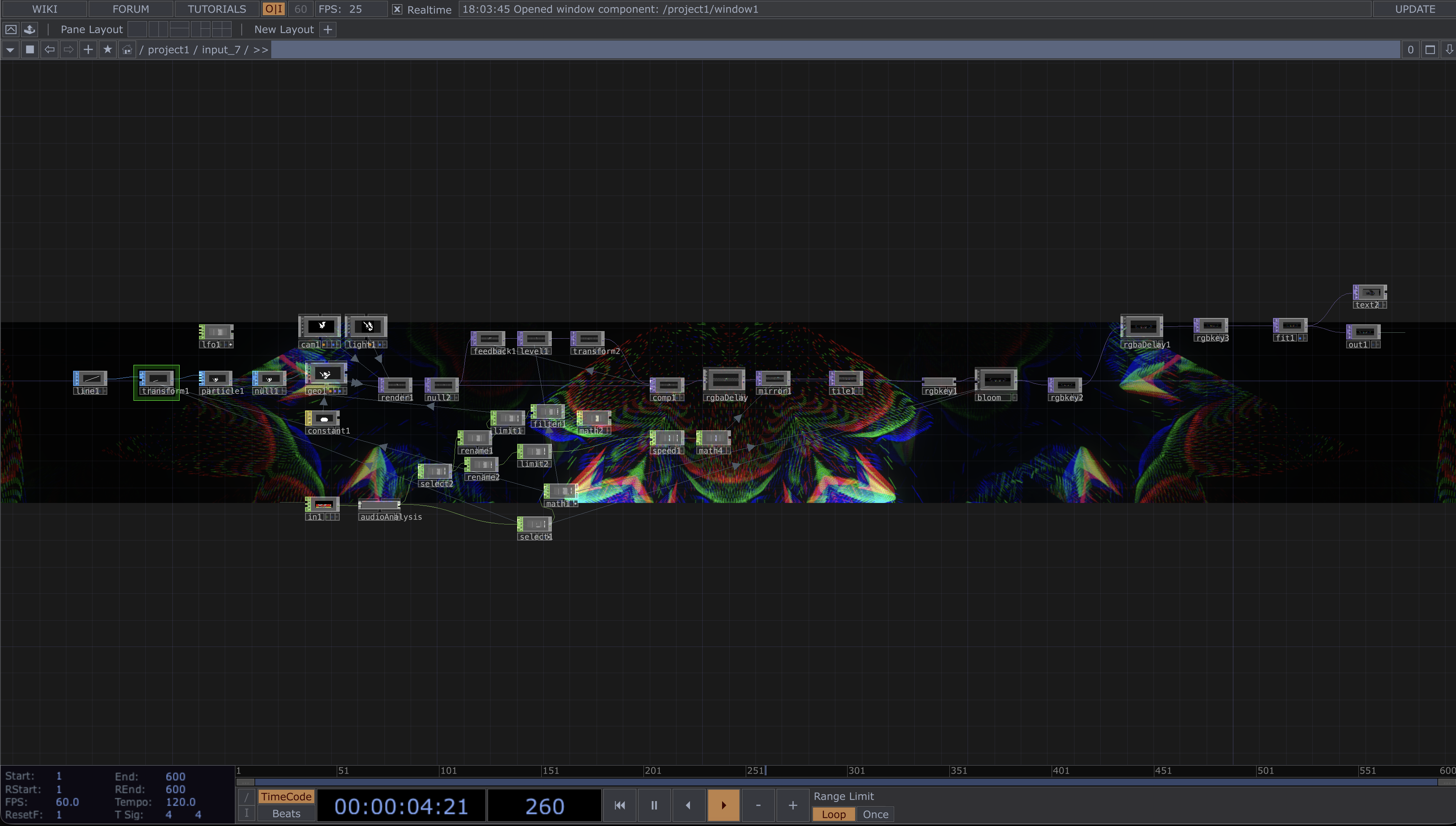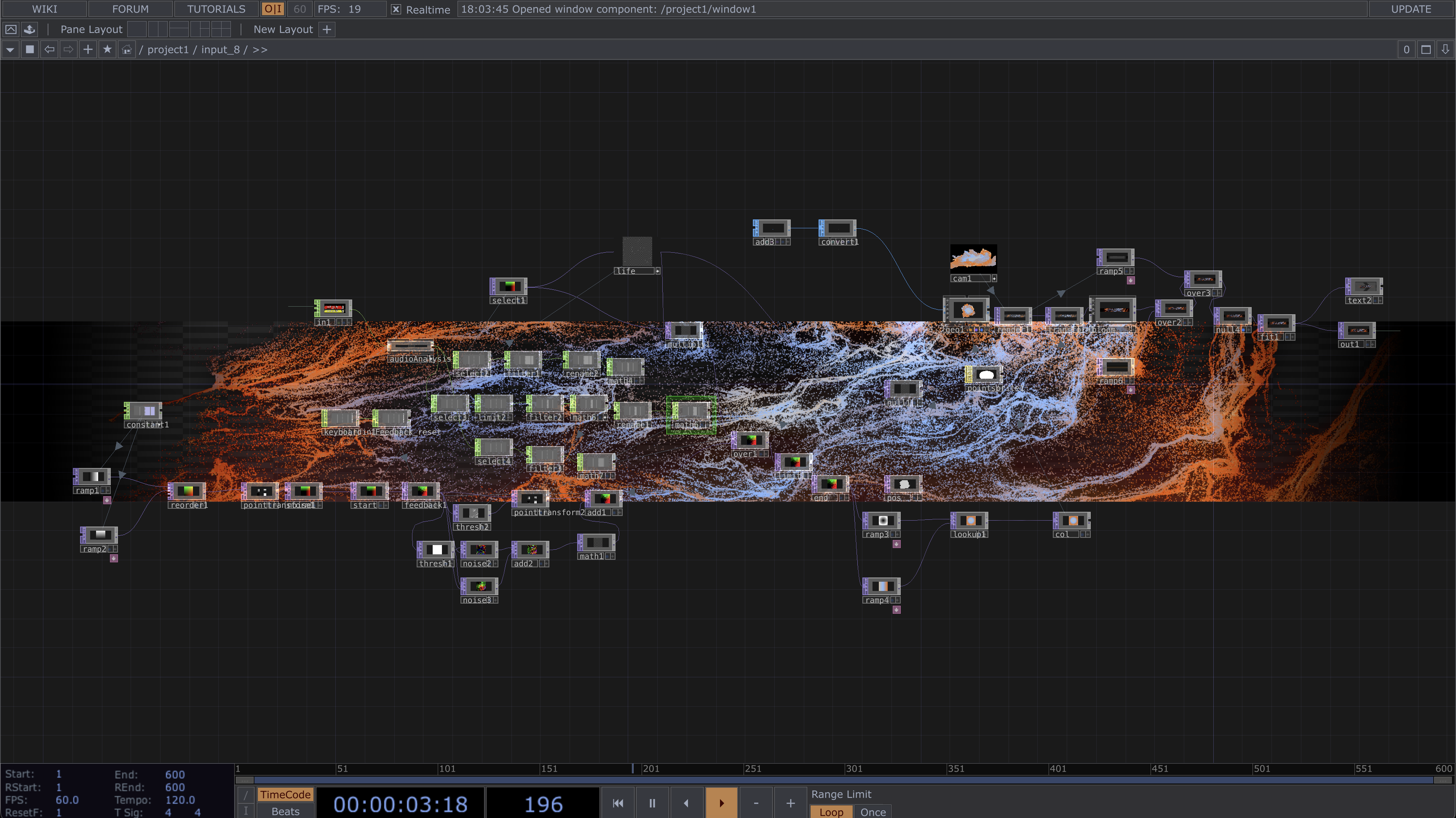






Project Description
A social networking party planned and hosted by Raum Art Center. The primary attendees were business owners, startup founders, and influencers, so securing a DJ for the networking session as the event highlight was essential to deliver a social club vibe. However, Raum Art Center strongly maintains a medieval castle visual/structure, which made it difficult to present the modern, youth-oriented visuals the audience expected. To bridge this gap, we used a beam projector to turn the large space into a canvas for real-time reactive visuals. This approach overcame the venue’s built-in limitations and created a new, more contemporary experience.
Technical Issue
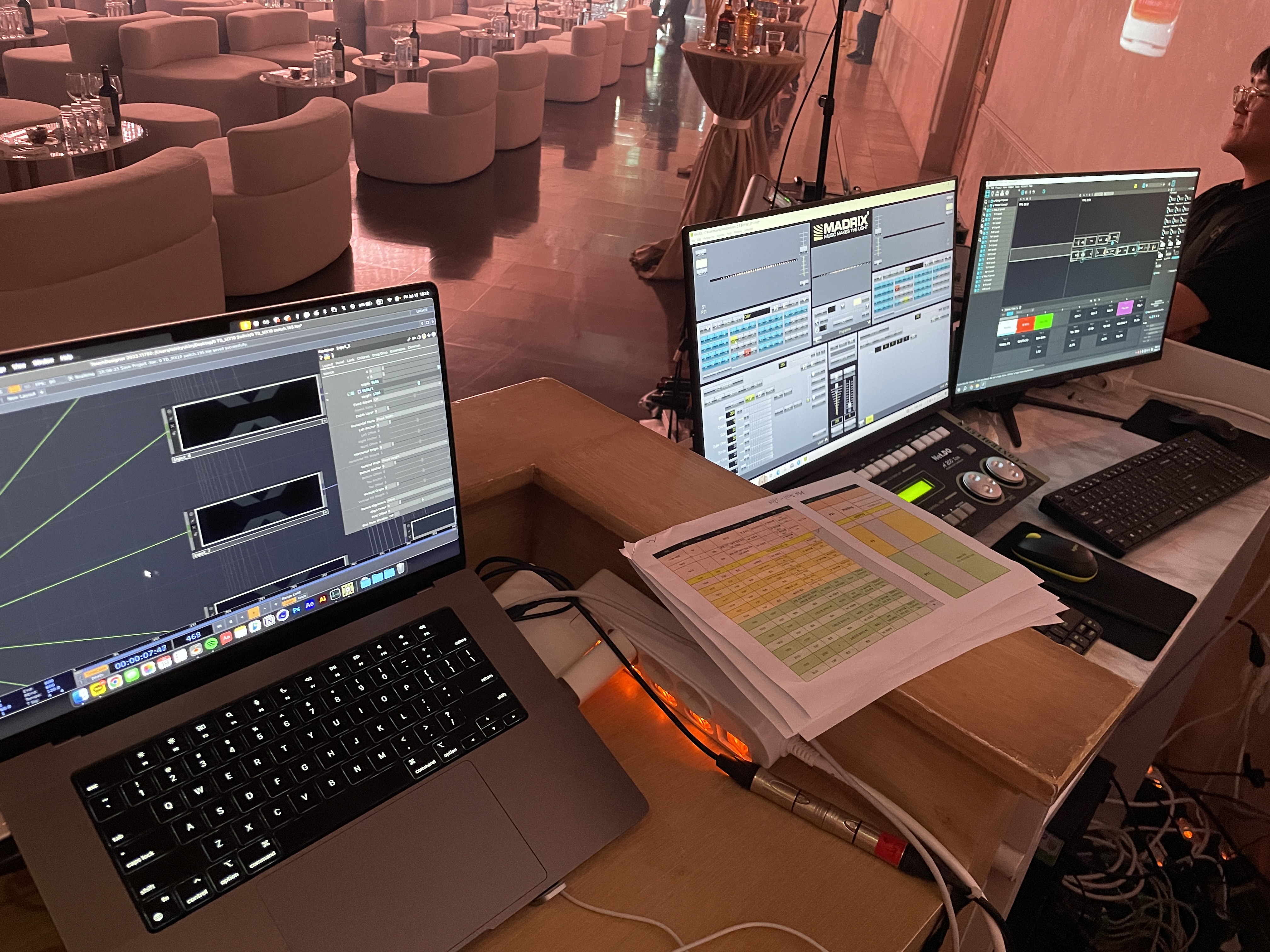
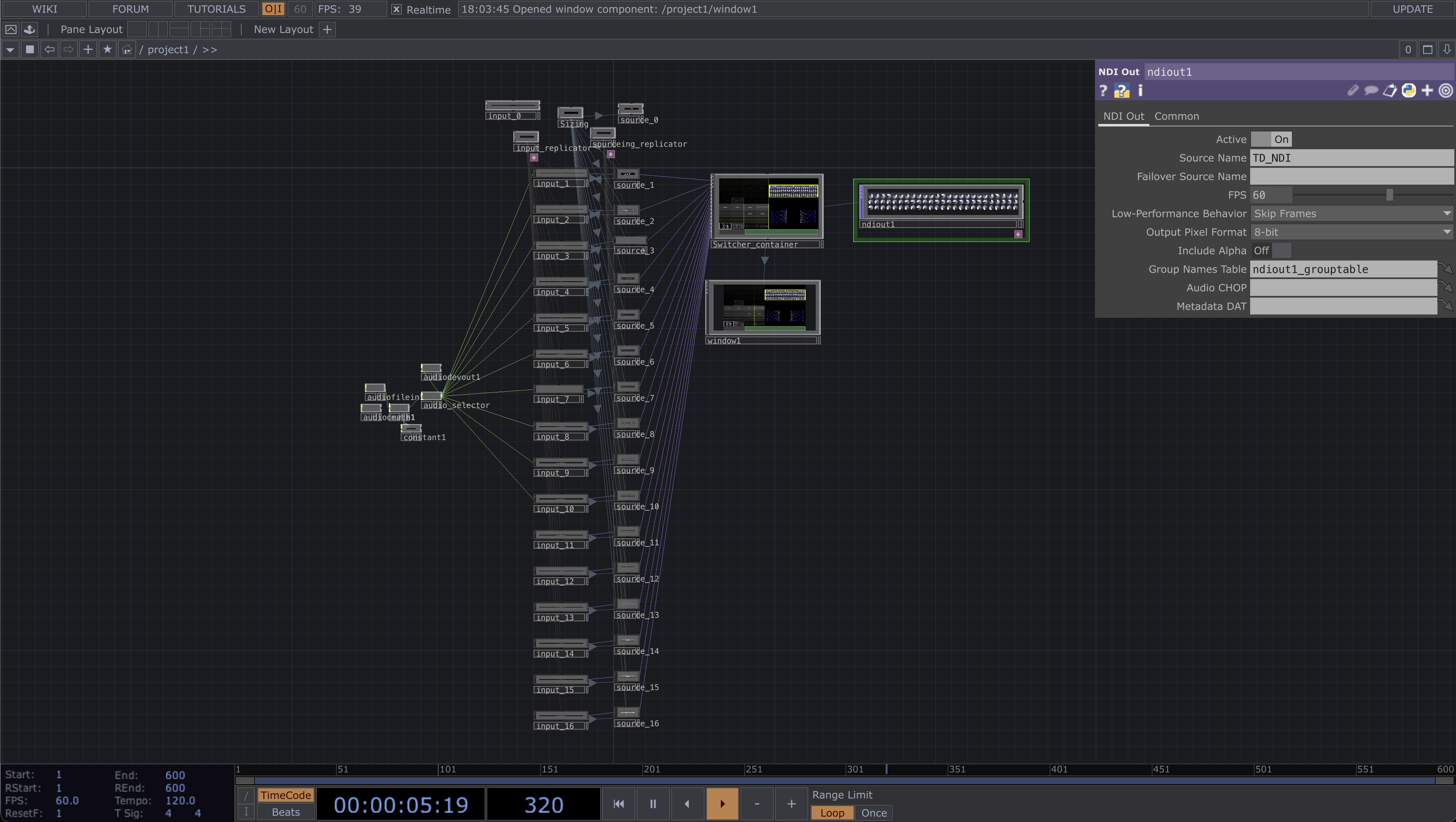
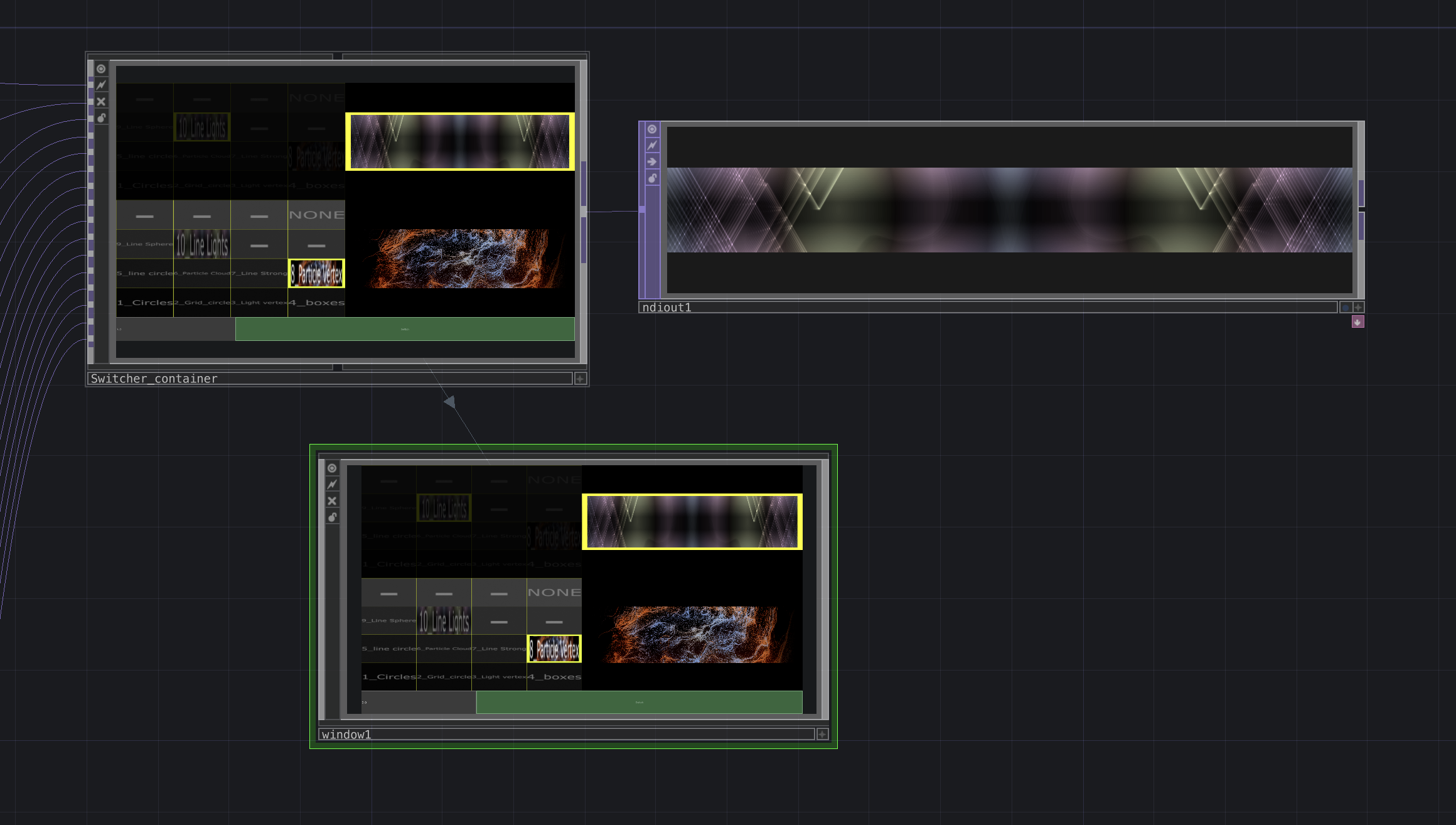
The video pipeline was structured as follows. Audio from the DJ booth was routed into TouchDesigner. TouchDesigner analyzed the audio data and generated reactive visuals. The visuals were then sent to Mad Mapper via NDI output. Mad Mapper delivered the final output to 12 installed projectors.
However, the installed PC couldn't handle both TouchDesigner and Mad Mapper. Maintaining a minimum of 60 fps at an unusual resolution of 29000*1200 px was not feasible. To solve this issue, I needed to understand how NDI works.
Solution: Local Network NDI
NDI is a local network based data transport protocol. A single computer already operates within its own local network environment, which is why NDI can run without additional hardware. I concluded that if I built a local network between two separate machines, I could split the workload between TouchDesigner and Mad Mapper while keeping the output live.
I connected a MacBook Pro for TouchDesigner processing and a Windows PC for MadMapper output using a crossover Ethernet cable to create a direct local network. As a result, I was able to maintain the required quality and deliver stable real-time projection output.
MX10 Switching System
With Cooking Switching
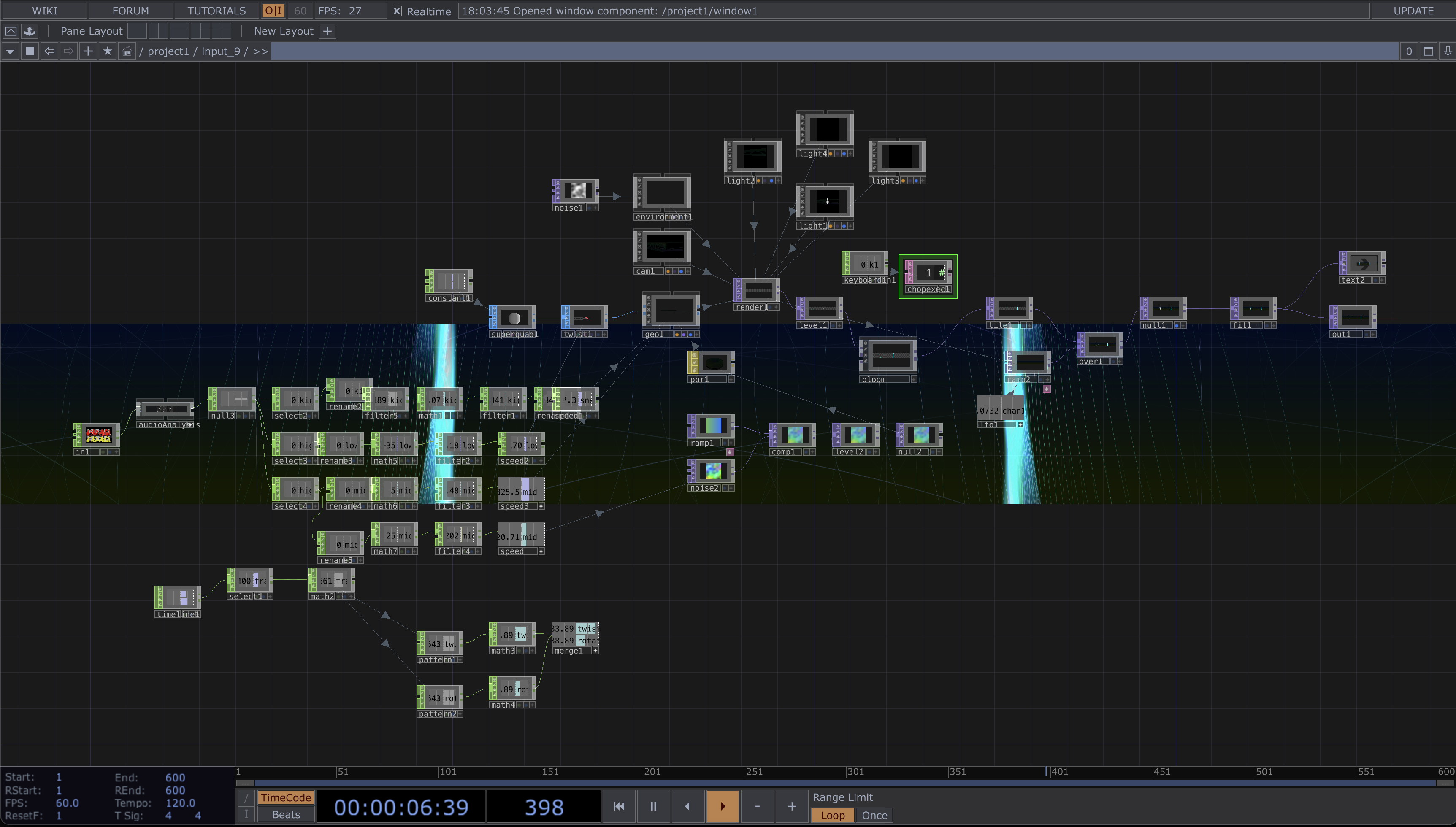
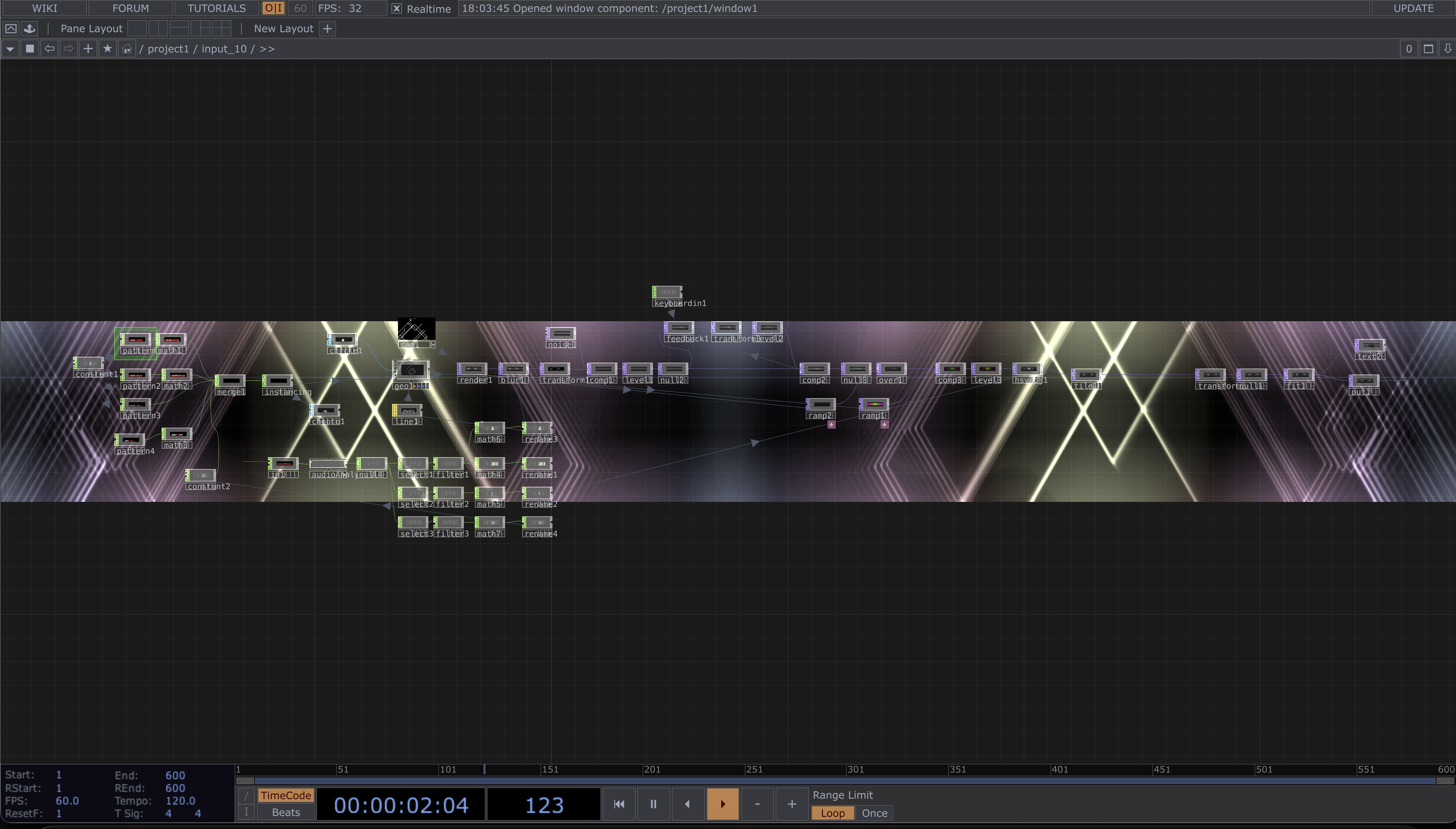
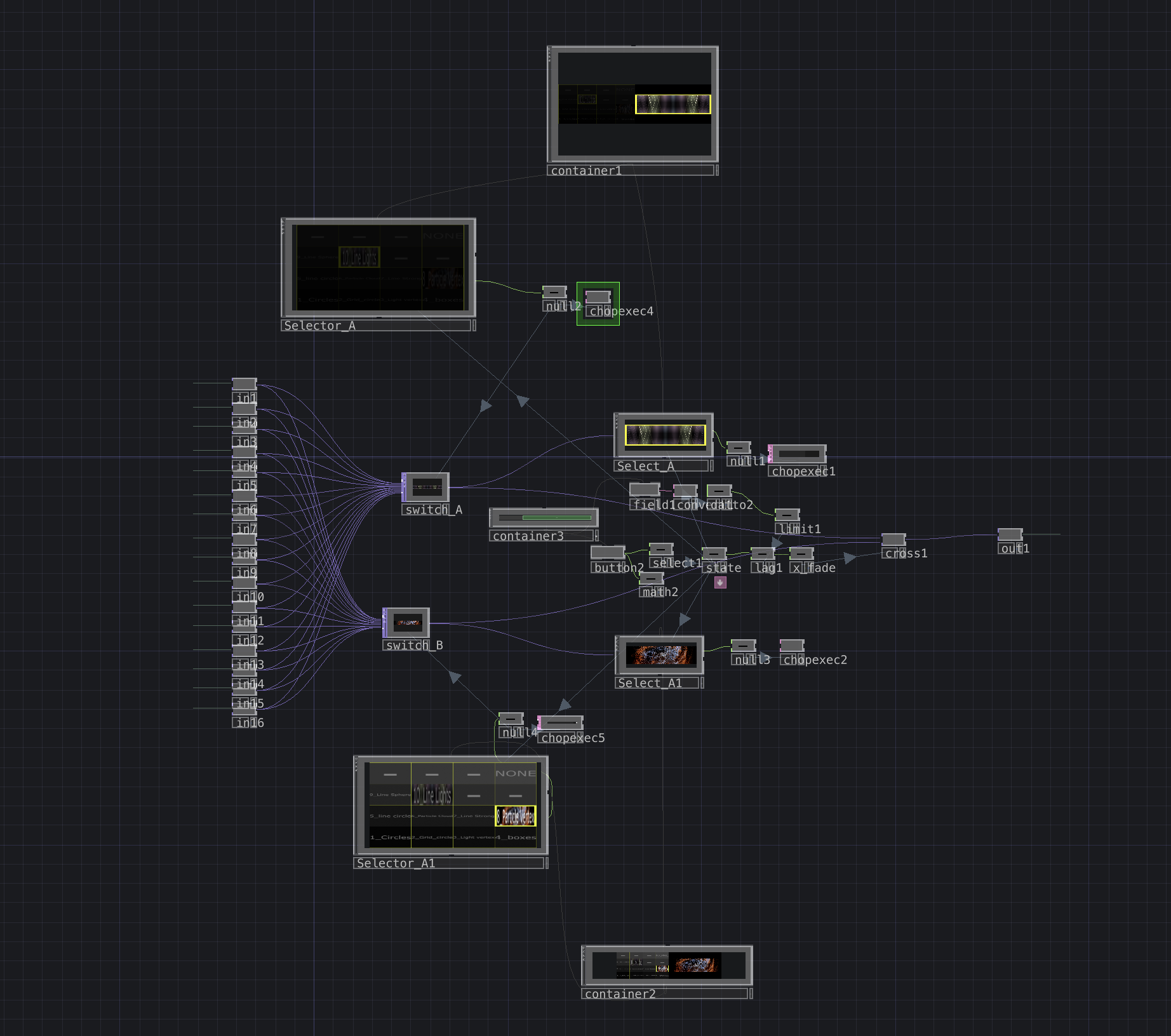
Rendering at an unusual resolution of 29000*1200 px puts significant strain on the PC. When 10 visuals are cooking simultaneously, performance drops to around 5-10 fps. I adopted the MX10 switching system to manage visual sources more efficiently, but it did not reduce the calculation load on its own.
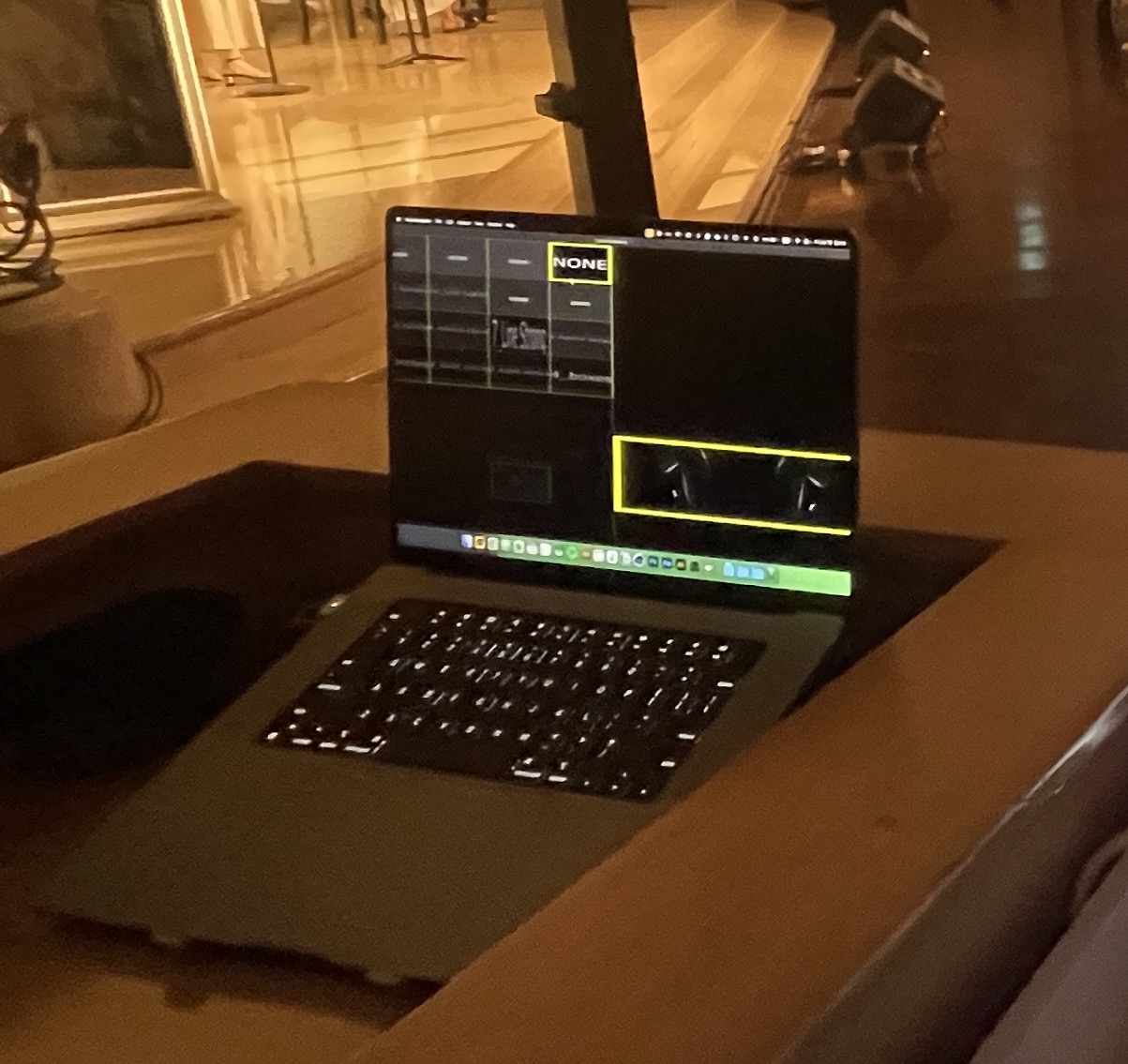
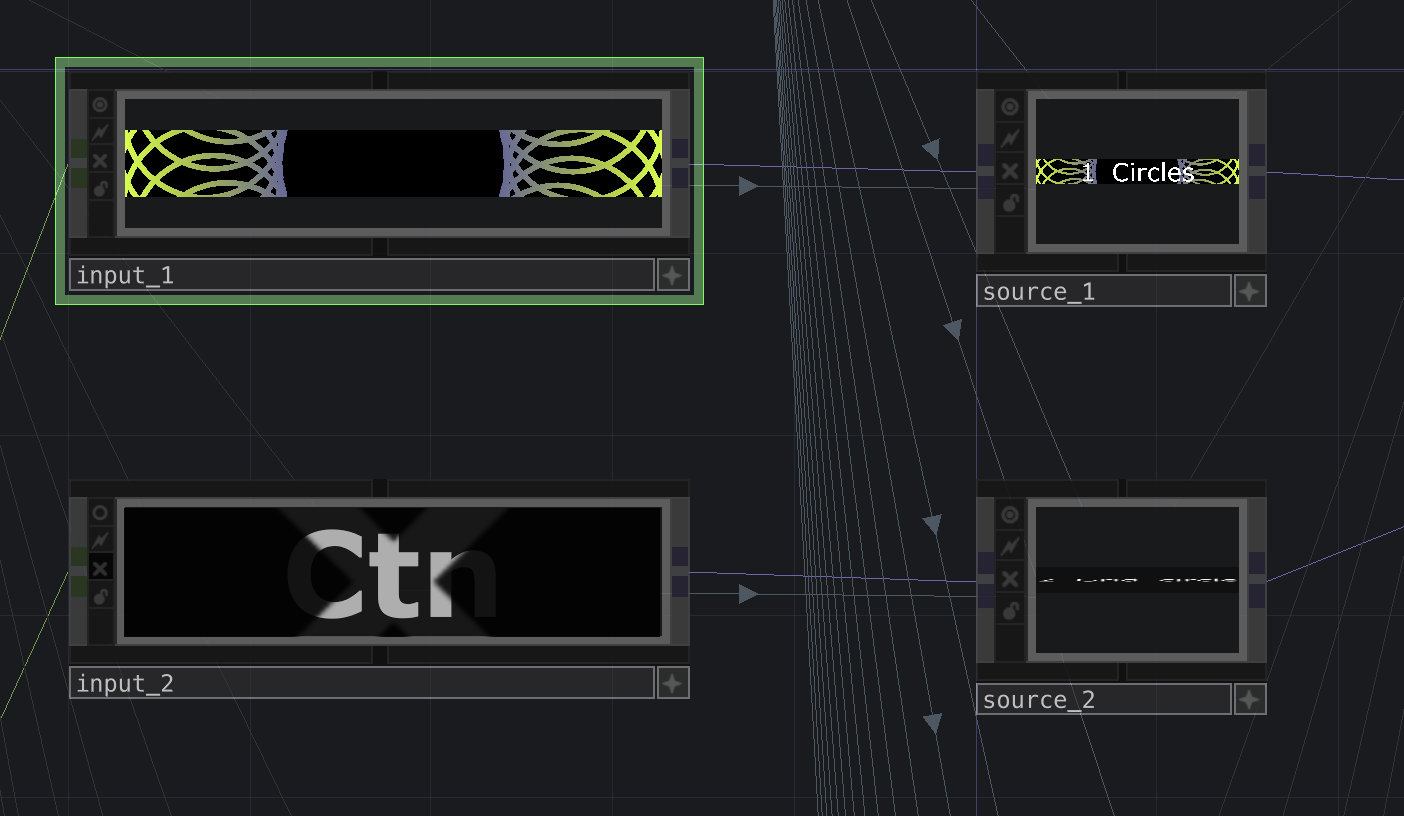
To solve this, I customized the MX10 switching system by limiting active cooking to a maximum of 2 visuals at a time. I allowed cooking only for the current visual and the next visual in the queue, while disabling cooking for all other visuals. This preserved the usability of the switching system while maintaining stable real-time output at 50-60 fps.
TouchDesigner Visual Containers